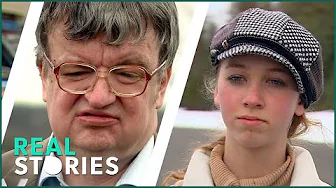
This unrelated identical twins documentary follows people searching for strangers who look remarkably like them. The idea is simple, but meeting someone who could pass for you raises fascinating questions about identity.
The film cites an estimate that every face has seven doppelganger matches around the world. However, a resemblance in photographs is only the beginning; the documentary also asks how closely these strangers match under expert testing.
As pairs meet for the first time, they compare lives and look for other similarities. Their reactions and discoveries give the film a personal side alongside its scientific investigation.
How this unrelated identical twins documentary tests resemblance
At St Thomas’ Hospital, twin experts examine the pairs using several different methods. First, 3D scanning measures facial features, while 2D facial recognition analysis offers another way to compare their faces.
The experts also use DNA ancestry testing, adding information beyond appearance. These tests matter because two people can look alike without sharing a close family connection.
Together, the comparisons make this unrelated identical twins documentary more than a series of first meetings. The film follows a process that weighs visual impressions against technical results.
What this documentary explains
- How strangers search for people who resemble them.
- How experts compare facial features with 3D and 2D methods.
- What DNA ancestry testing adds to the investigation.
- How 100 people rank the pairs by resemblance.
Strangers meet and compare lives
The participants track down their lookalikes across the globe, then meet in person. At that first encounter, each pair can see how a resemblance feels beyond a photograph.
Afterward, they get to know one another and explore possible similarities in their lives. The documentary leaves room for those conversations, rather than treating facial likeness as the whole story.
A doppelgänger can prompt a personal question: how much can a face tell us about another person? Here, the pairs’ meetings help place that question in everyday experience.

Why this unrelated identical twins documentary stays with you
The film brings together individual reactions and evidence from experts. As a result, viewers can consider both the emotional surprise of meeting a lookalike and the limits of judging by sight.
Next, 100 people rate photographs, ordering the pairs from most alike to least alike. Their judgments add a public comparison to the scans, facial analysis and ancestry tests.
Finally, the experts consider all the results before revealing which pair is the most identical. That structure gives the search a clear destination without reducing the subject to a simple contest.
A thoughtful watch for curious viewers
This film should appeal to viewers interested in human evolution, psychology, the brain and the science of faces. It also suits anyone curious about how strangers respond to an uncanny resemblance.
Origin’s documentary runs for 47 minutes and 10 seconds. Because it combines personal meetings with several kinds of testing, it offers a focused look at both people and evidence.
You can watch it free here on Topic Tainment. Set aside an evening for the full film, and follow the pairs from their first meetings through the experts’ final comparison.
Looking for your next watch? Start with Life In A Day 2010, then Life in a Day 2020. Or browse the full collection of nature documentaries.
A familiar-looking face can open a surprising question about identity, evidence and the people behind the resemblance.
Key takeaway from the documentary