

What Space Documentaries Cover
Also, these films cover orbital life, planetary exploration, theoretical physics, entrepreneurship, and reports of unexplained sightings. For broader science topics, visit the Science & Space category. However, it focuses on specific missions and questions, not the universe as a whole.
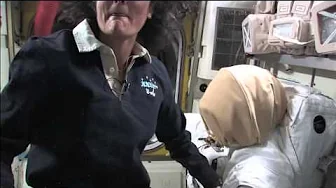
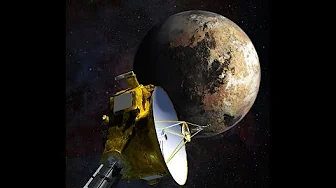
You can compare the International Space Station tour with Sunita Williams with NASA’s New Horizons mission toward Pluto. Meanwhile, one visits modules and research facilities; the other follows a spacecraft toward Pluto and the Kuiper Belt. So, together, they make space exploration concrete through an orbital laboratory and a planetary mission.
What You Can Discover in These Space Films
- Life in orbitNASA’s 25:04 station tour visits modules, research facilities, and the practical setting of life aboard an orbital laboratory.
- Planetary frontierThe 58:33 New Horizons film follows the mission toward Pluto and the Kuiper Belt.
- First contactSpark’s 50:47 documentary considers possibilities and uncertainties if humanity receives contact from extraterrestrial life.
Choose a Space Documentary by Length and Angle
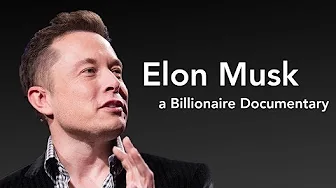
First, for equations and theory, start with Veritasium’s guide to Einstein’s math, black holes, and wormholes, which follows what physics predicts. For a business angle, the Elon Musk portrait of Tesla and SpaceX covers entrepreneurship, innovation, and risk. They run 37:02 and 43:25, respectively.
For speculative questions, the 50:47 film about possible alien contact considers what might happen after a message arrives. For UFO and alien documentaries, compare Spark’s contact scenario with 7 News Spotlight’s 1:18:48 UFO film on witnesses and Australian reports. So choose the first for possibilities, or the longer one for claims; neither treats uncertainty as settled fact.